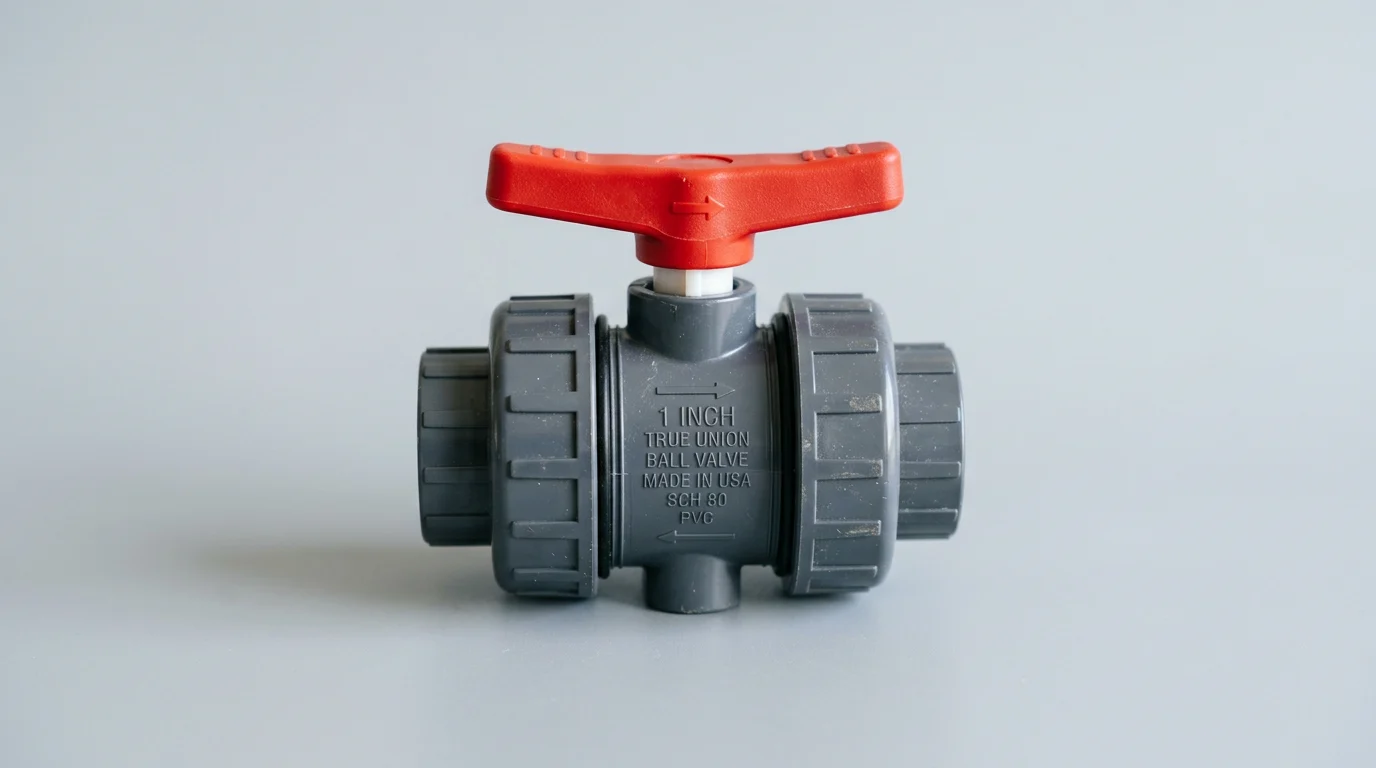
Why a PVC Ball Valve Becomes Hard to Turn
Fluid handling systems rely heavily on the structural integrity and sealing capabilities of the PVC ball valve. While these components are engineered for durability and leak-free performance, operators frequently encounter increased rotational resistance over time. Understanding the mechanical dynamics between the ball and the seating material is critical for diagnosing stiff operation without compromising the valve’s seal.
Normal Operating Torque
The rotational resistance of a valve is quantified as operating torque. Normal torque varies widely depending on the valve’s size, design, and manufacturer specifications. This baseline friction is intentionally engineered into the Polytetrafluoroethylene (PTFE) seats to maintain a tight seal up to the valve’s maximum pressure rating. In the field, you can judge excessive torque without a specialized wrench: if the valve requires two hands, significant body weight, or tools like pliers to turn, the resistance has clearly surpassed normal operating limits.
Common Causes of Stiff Operation
When rotational force significantly exceeds normal levels, several environmental and mechanical factors are usually responsible. Mineral scaling from hard water can deposit thick calcium carbonate layers on the ball surface, effectively roughening or coating the surface and acting as an abrasive. Additionally, operating standard polyvinyl chloride near its thermal limit of 140°F (60°C) causes material expansion. It is important to note that PVC pressure ratings derate significantly as the temperature approaches this 140°F limit. This combined thermal and mechanical load is a common, often overlooked cause of stiffness and stem failure, as it drastically increases friction against the rigid PTFE seats. Conversely, extremely cold temperatures also increase PVC stiffness and brittleness, raising the risk of stem fracture when forcing the handle. Chemical incompatibility can also lead to the swelling of EPDM or FKM O-rings, effectively locking the stem and ball in place.
How to Make a PVC Ball Valve Easier to Turn
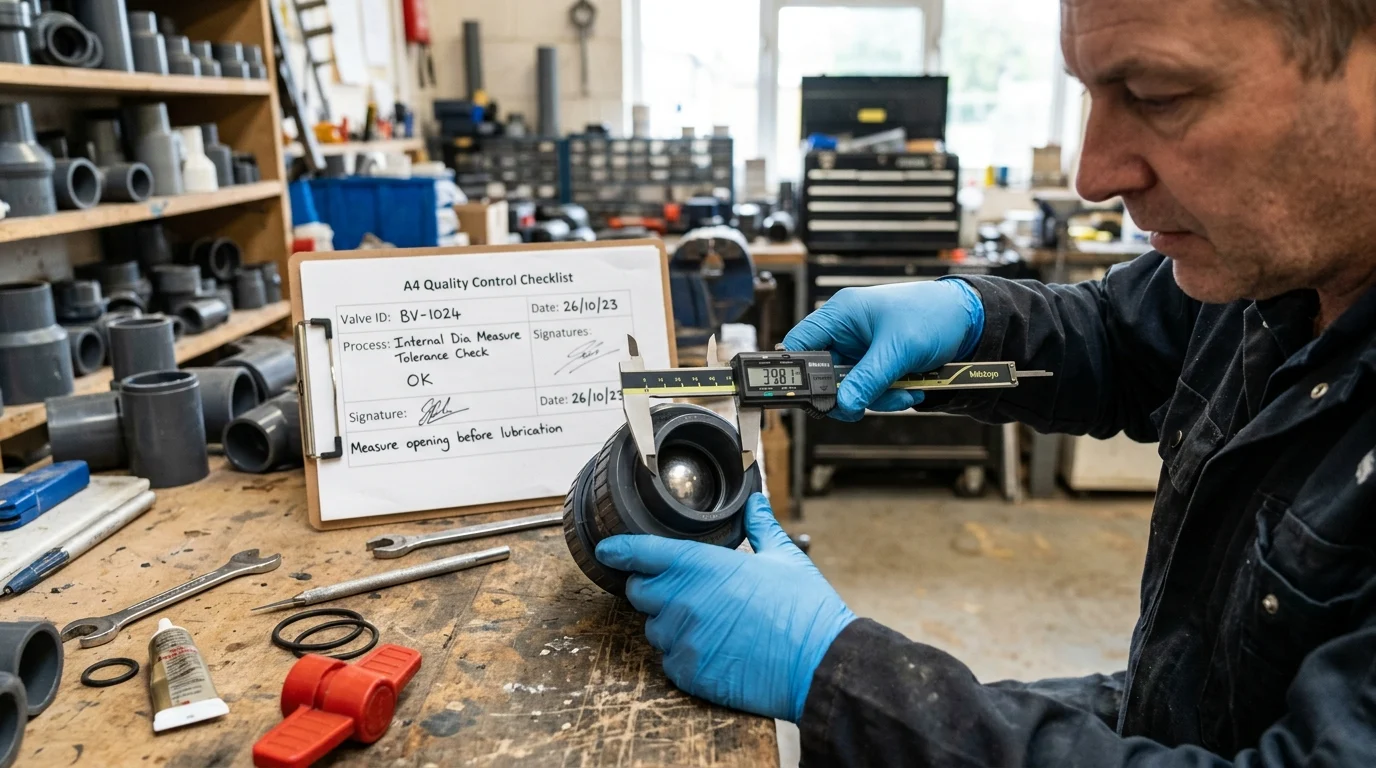
Reducing stiffness requires a systematic approach to mechanical adjustment and cleaning. Acting early when a valve becomes hard to turn can prevent catastrophic handle fracture and extend the component’s operational lifespan. Safety Warning: Never force a stuck handle, as this can easily shear the valve stem. Before beginning any maintenance, ensure the system is fully isolated, depressurized, and completely drained. Furthermore, standard sealed (non-repairable) valves cannot be disassembled; attempting to do so will destroy them. Maintenance for these sealed units is strictly limited to external flushing and lubrication.
Before attempting any disassembly, perform a brief pre-maintenance diagnostic to identify the root cause:
- Check for pressure trapping: Ensure the line is fully depressurized, as trapped fluid pressure will lock the ball against the seat.
- Confirm valve position: Verify the valve is fully open or closed during inspection, as mid-stroke binding can mimic a seized valve.
- Inspect for handle or stem damage: Look for stress cracks that indicate the valve must be replaced rather than repaired.
- Identify the valve type: Determine if you have a repairable true-union/split-body valve or a standard sealed (non-repairable) unit.
Step-by-Step Maintenance Process
Disassembly and internal seat adjustments apply only to repairable true-union or split-body designs. For these repairable models, the primary mechanical adjustment involves modifying the internal seat compression. After safely isolating and draining the line, unthread the union nuts and remove the central valve body from the pipeline. If your valve features an adjustable seat carrier—often secured by a threaded ring on one side of the bore—use a specialized spanner wrench to slightly adjust the tension. Note that not all true-union valves feature an adjustable seat carrier; many have fixed retainers, and forcing them will crack the body or strip the threads. When adjusting a compatible carrier, backing off the ring can noticeably reduce stiffness. However, this risks creating leaks if loosened too much. Always adjust in small increments (e.g., 1/8 turn) and monitor for weeping once the system is repressurized.
For sealed units, since disassembly is impossible, maintenance is limited to flushing the line to clear debris or exercising the valve (turning it open and closed repeatedly) to break up minor scale.
Safe Cleaning and Lubrication
Proper cleaning and lubrication are critical for restoring smooth operation. For repairable valves with internal access, if light mineral scale is present, use a mild descaling procedure, such as soaking the affected parts in diluted vinegar for 30 minutes to several hours. For heavier buildup, use a manufacturer-approved cleaner. Always wear appropriate personal protective equipment (PPE), ensure adequate ventilation, and strictly verify chemical compatibility with the specific O-ring elastomer (such as EPDM or FKM) before applying any cleaner.
When lubricating, strictly avoid petroleum-based products, such as standard penetrating oils or motor grease, which aggressively attack and degrade EPDM O-rings. Instead, apply a light film of 100% silicone grease or a specialized plumbing lubricant directly to the ball surface and stem O-rings.
For sealed valves where internal access is impossible, you can attempt to apply a silicone-based spray lubricant externally at the base of the stem while turning the handle to work it into the upper O-ring, though effectiveness is limited. After any lubrication, turn the handle several times across its full 90-degree stroke to distribute the silicone evenly.
When to Adjust, Rebuild, or Replace the Valve
Maintenance staff and DIYers must balance the labor time of repairs against the cost of a new valve. For inexpensive valves, full replacement is often more economical than attempting a rebuild. Determining whether to rehabilitate a seized component or completely swap it out requires evaluating the valve type, the severity of internal wear, and the structural integrity of the plastic housing.
Repair vs. Replacement Criteria
Not all stiff valves are candidates for rehabilitation. The decision depends on the valve type and the severity of the damage. Use the table below to determine whether a quick rebuild is economical or if full replacement is mandatory to prevent leaks and blowouts.
| Valve Type | Condition | Decision Factors | Recommended Action |
|---|---|---|---|
| Sealed / |
Key Takeaways
- Stop using the valve if it requires two hands, body weight, or tools to turn, because that resistance is beyond normal operating torque.
- Always isolate, depressurize, and drain the system before attempting maintenance on a stiff PVC ball valve.
- Check for hard-water scale, trapped pressure, chemical O-ring swelling, and temperature extremes before deciding whether to clean, lubricate, or replace the valve.
- Avoid operating standard PVC near 140°F (60°C), because thermal expansion and pressure derating can greatly increase friction and failure risk.
- Do not disassemble sealed non-repairable PVC valves; limit maintenance to flushing and compatible external lubrication.
- Replace the valve instead of repairing it if the handle, stem, or body shows stress cracks or other visible damage.
Frequently Asked Questions
Why is my PVC ball valve hard to turn?
Common causes include trapped pressure, mineral scale on the ball, heat-related PVC expansion, cold-weather brittleness, chemical swelling of O-rings, or damage to the handle or stem.
Can I force a stuck PVC ball valve with pliers?
No. Forcing the handle with pliers or body weight can shear the stem or crack the valve body. Isolate, depressurize, and diagnose the cause before applying more force.
What temperature makes PVC valves more likely to bind?
Standard PVC approaches its upper service limit around 140°F (60°C). Near this temperature, PVC expands and pressure ratings derate, which can increase friction against the seats.
Can all PVC ball valves be taken apart for cleaning?
No. True-union or split-body valves are usually repairable, but sealed non-repairable valves should not be disassembled. For sealed valves, maintenance is limited to external flushing and compatible lubrication.
Does hard water make a PVC ball valve stiff?
Yes. Hard water can leave calcium carbonate scale on the ball surface, making it rougher and increasing friction against the PTFE seats.
Post time: Aug-07-2026