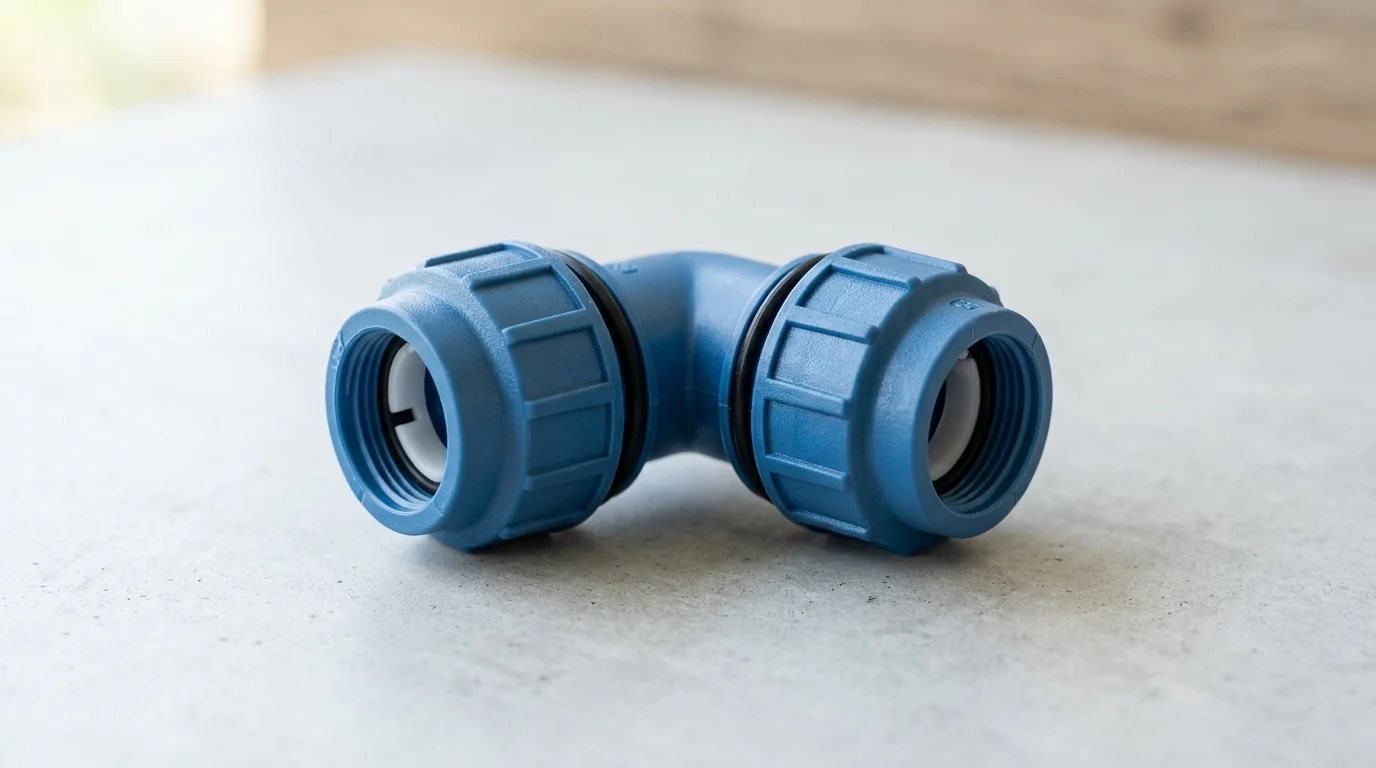
Why PP Compression Fitting Thread Selection Matters
The mechanical integrity of any thermoplastic piping network relies heavily on the precision of its joint connections. In industrial, agricultural, and municipal fluid conveyance systems, specifying the correct thread type for a PP Compression Fitting is a critical engineering decision. Because these systems frequently operate at pressures up to PN16 (16 bar), any mismatch in thread geometry compromises the pressure boundary, leading to leaks or joint failure.
Engineers must navigate a complex landscape of thread standards to ensure seamless integration with valves, pumps, and existing metallic or plastic piping. The primary classifications—BSP, NPT, and Metric—govern the geometric profiles and sealing mechanics of these connections. Understanding the fundamental definitions and regional adoption patterns of these threads is the first step in mitigating procurement errors and ensuring long-term reliability.
How BSP, NPT, and Metric Threads Are Defined
At the core of thread specification is the geometric profile, defined by thread angle, pitch, and taper. British Standard Pipe (BSP) threads feature a 55-degree Whitworth thread angle with rounded peaks and valleys. National Pipe Taper (NPT) threads, conversely, utilize a 60-degree angle with flattened peaks and valleys. Both BSP and NPT measure pitch in threads per inch (TPI), though their respective TPI values often diverge for the same nominal pipe size.
Metric threads operate on an entirely different dimensional paradigm governed by ISO standards. Unlike the imperial TPI measurement, metric thread pitch is defined by the direct linear distance between adjacent thread peaks, measured in millimeters (e.g., M32 x 1.5 indicates a 32mm outer diameter with a 1.5mm pitch). This fundamental divergence means that imperial and metric systems are inherently incompatible without specialized transition adapters.
Regional and Commercial Thread Standards
Thread standard adoption is heavily dictated by regional engineering conventions and commercial supply chains. Europe, Asia, Africa, and Oceania predominantly rely on the BSP standard, specifically ISO 7 for tapered threads (BSPT) and ISO 228 for parallel threads (BSPP). In contrast, North America strictly adheres to the NPT standard defined by ANSI/ASME B1.20.1. Metric threads are less common in general water transport but dominate specialized industrial machinery and European pneumatic systems.
Failing to account for these regional standards during procurement can result in significant supply chain bottlenecks. Sourcing NPT-threaded polypropylene fittings from a manufacturer optimized for European BSP markets may trigger custom production runs. Such deviations can incur higher minimum order quantities and significantly extend lead times. Consequently, aligning fitting specifications with regional commercial standards is a best practice for maintaining project timelines and budget constraints.
Key Differences Between BSP, NPT, and Metric Threads
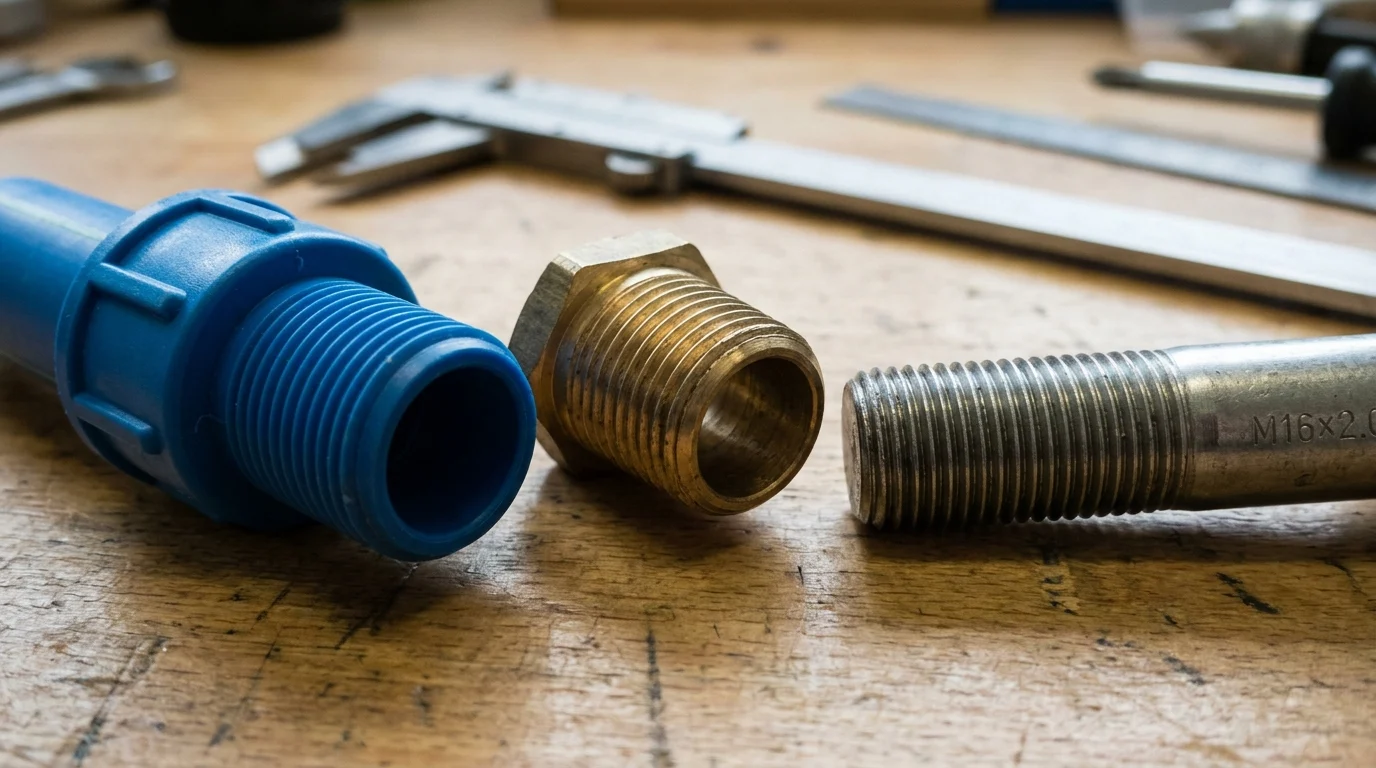
While they may appear visually similar to the untrained eye, the physical differences between BSP, NPT, and Metric threads dictate entirely different sealing mechanisms and operational tolerances. A comprehensive understanding of these dimensional and structural variances is essential for avoiding mechanical failures in pressurized environments.
Dimensions, Sealing Methods, and Taper Profiles
The most critical distinction lies in the taper profile and the resulting sealing method. NPT threads are universally tapered at a rate of 1 inch in 16 inches (or 3/4 inch per foot). This taper forces the male and female threads to wedge together, creating an interference fit that relies on thread sealant or PTFE tape to achieve a pressure-tight seal.
BSP threads are divided into two distinct categories: BSPT (tapered) and BSPP (parallel). BSPT functions similarly to NPT by utilizing a taper to create a seal. While both NPT and BSPT share an approximate 1:16 taper ratio, their underlying profiles and thread angles differ, making them incompatible. BSPP threads, being parallel, do not form an interference fit; instead, they require a secondary sealing element, such as an O-ring or a bonded elastomeric washer compressed at the base of the fitting. Metric threads can be either parallel or tapered, though parallel configurations utilizing O-ring seals are standard in modern thermoplastic assemblies.
| Feature | NPT (National Pipe Taper) | BSPT (British Standard Pipe Taper) | BSPP (British Standard Pipe Parallel) | Metric (ISO) |
|---|---|---|---|---|
| Thread Angle | 60° | 55° | 55° | 60° |
| Pitch Measurement | Threads Per Inch (TPI) | Threads Per Inch (TPI) | Threads Per Inch (TPI) | Distance in mm |
| Taper | Yes (1:16) | Yes (1:16, differing profile) | No (Parallel) | Varies (Mostly Parallel) |
| Primary Seal Method | Interference + Sealant | Interference (often with PTFE tape) | O-Ring / Washer | O-Ring / Washer |
Leakage, Cross-Threading, and Compatibility Risks
The structural risks of mixing thread standards cannot be overstated. A common error is attempting to mate a 1/2-inch NPT male fitting (14 TPI, 60-degree angle) with a 1/2-inch BSPT female fitting (14 TPI, 55-degree angle). Because the TPI is identical at this specific size, the threads will initially engage, giving the installer a false sense of security.
However, the 5-degree discrepancy in the thread angle prevents uniform load distribution. Polypropylene’s lower stiffness compared to metal makes thread engagement particularly sensitive to these mismatches, inducing thread galling and stress fractures. Furthermore, polypropylene possesses a relatively high thermal expansion coefficient (~150 × 10⁻⁶/°C). This means temperature cycling can progressively loosen improperly mated joints over time. When the system is pressurized, these compromised connections are highly susceptible to leakage, often failing well below their standard PN16 rating.
How to Choose and Verify the Right Thread
Selecting the appropriate thread type requires rigorous identification protocols in the field and strict adherence to compliance standards during procurement. Implementing systematic verification processes ensures the specified fittings will perform reliably over their intended operational lifespan.
Practical Identification and Measurement Methods
Accurate thread identification requires precision measuring instruments; visual inspection is insufficient. Field engineers and quality control technicians must utilize digital calipers to measure the exact outside diameter (OD) of the male thread or the inside diameter (ID) of the female thread. These measurements must then be cross-referenced against standardized dimensional charts.
Equally important is
Key Takeaways
- Confirm the thread standard before ordering PP compression fittings because BSP, NPT, and Metric threads are not automatically interchangeable.
- Use BSP fittings for most projects in Europe, Asia, Africa, and Oceania, and specify ISO 7 for BSPT or ISO 228 for BSPP when required.
- Use NPT fittings for North American systems where ANSI/ASME B1.20.1 is the standard reference.
- Check both thread angle and pitch because BSP uses a 55-degree rounded profile, while NPT uses a 60-degree flattened profile.
- Specify metric threads by diameter and pitch in millimeters, such as M32 x 1.5, rather than by threads per inch.
- Avoid forcing mismatched threads in PN16 systems, as pressures up to 16 bar can expose poor sealing and cause leaks or joint failure.
Frequently Asked Questions
Can BSP and NPT threads be connected directly?
No. BSP uses a 55-degree Whitworth profile, while NPT uses a 60-degree profile. Even if the sizes look similar, the thread geometry and pitch can differ, causing poor sealing, leakage, or thread damage.
What thread type is most common for PP compression fittings in Europe and Asia?
BSP is the most common standard in Europe, Asia, Africa, and Oceania. BSPT follows ISO 7 for tapered threads, while BSPP follows ISO 228 for parallel threads.
Why does thread selection matter for PN16 PP compression fittings?
PN16 systems can operate up to 16 bar, so incorrect thread geometry can compromise the pressure boundary. A mismatch may lead to leaks, joint loosening, or complete connection failure.
How are metric threads identified?
Metric threads are identified by diameter and pitch in millimeters, such as M32 x 1.5. This means a 32 mm outside diameter with 1.5 mm spacing between thread peaks.
Where are NPT threads mainly used?
NPT threads are mainly used in North America and are defined by ANSI/ASME B1.20.1. They are common in plumbing, irrigation, industrial piping, and equipment connections in that market.
Post time: Oct-09-2026