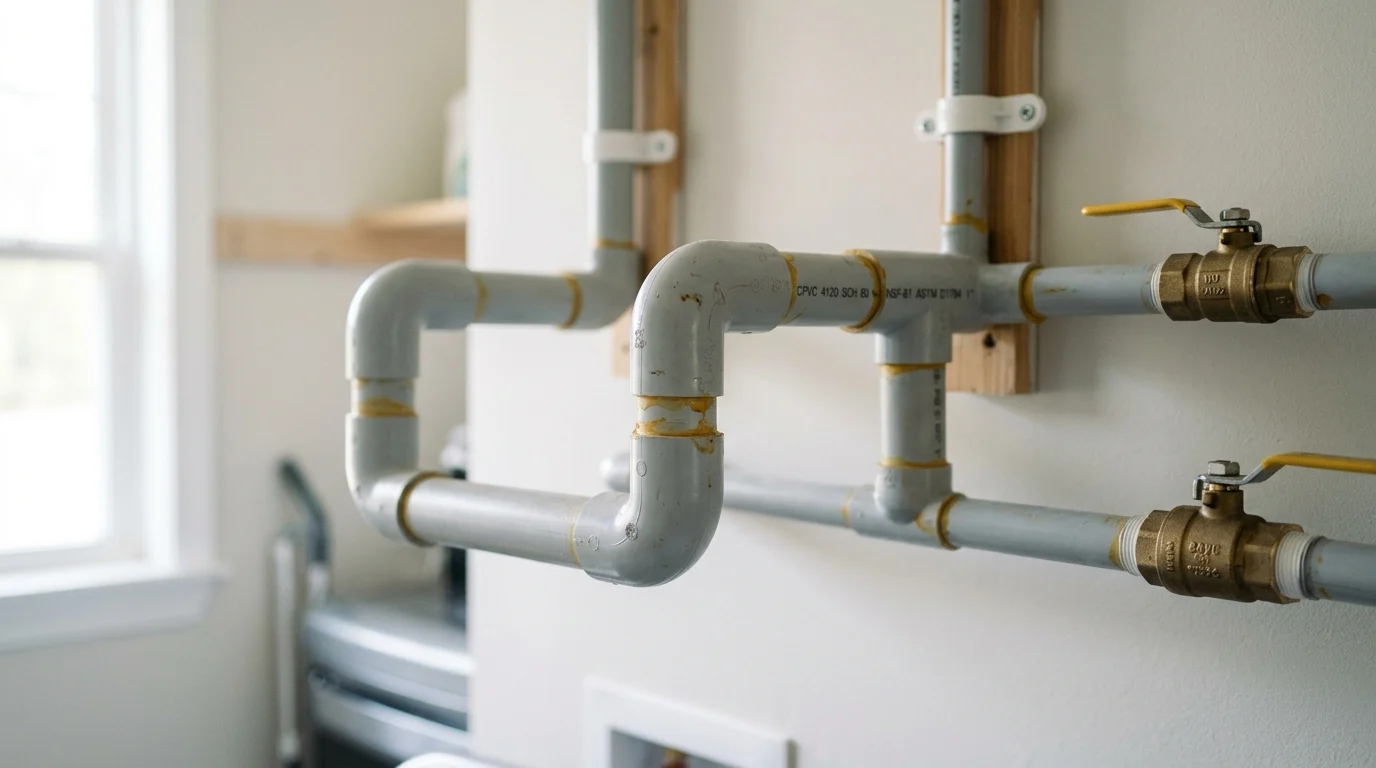
Key Differences Between CPVC and PVC Ball Valves
Specifying the correct thermoplastic valves for fluid handling systems requires a rigorous understanding of polymer properties. While Polyvinyl Chloride (PVC) and Chlorinated Polyvinyl Chloride (CPVC) share a foundational polymer chain, their distinct molecular structures yield vastly different operational capabilities, particularly concerning thermal limits, chemical resistance, and pressure-bearing capabilities. Recognizing these disparities is critical for preventing system failures, maintaining regulatory compliance, and optimizing lifecycle costs in industrial piping networks.
Material Chemistry and Commercial Positioning
The fundamental distinction between these two materials lies in their halogenation. Standard PVC is synthesized through the polymerization of vinyl chloride monomers, resulting in a thermoplastic that contains approximately 57% chlorine by mass. This baseline chemistry provides excellent corrosion resistance and rigidity for ambient temperature applications.
CPVC undergoes an additional post-polymerization chlorination reaction. Through a free radical chlorination process, a portion of the hydrogen atoms on the PVC backbone is replaced by chlorine atoms. This elevates the total chlorine content to a range of 63% to 69% by mass. This increased chlorine density significantly raises the glass transition temperature of the polymer, directly translating to enhanced thermal stability and a more robust material profile for demanding industrial valve applications. Furthermore, CPVC’s higher chlorine content generally yields improved flame and smoke resistance, a relevant specification criterion for commercial and infrastructure piping codes.
Temperature, Pressure, and Performance Comparison
The elevated thermal stability of CPVC radically alters its performance envelope compared to standard PVC, particularly regarding thermal and pressure tolerances. Standard PVC valves are generally limited to applications where the fluid media remains below 140°F (60°C). Above this threshold, the material softens, losing structural integrity and pressure-bearing capacity. Conversely, CPVC maintains its mechanical strength at significantly higher temperatures, boasting a maximum operating limit of 200°F (93°C).
Pressure derating is another critical engineering consideration for valve specification. As temperatures rise, the pressure rating of all thermoplastic valves decreases. Because of its structural rigidity, a CPVC ball valve experiences a less aggressive thermal derating curve than its PVC counterpart. However, direct pressure comparisons must also account for dimensional standards. While CPVC and PVC valves are often associated with different sizing systems (such as Copper Tube Size [CTS] versus Iron Pipe Size [IPS] or Schedule 40/80), these conventions are largely market-driven rather than inherent material limitations. Both materials can be produced to various standards, so specifiers must verify the specific valve designation. Wall thickness and diameter significantly influence pressure ratings alongside material thermal curves.
Additionally, engineers must account for cold-weather performance. As a typical industry guideline, CPVC exhibits reduced impact resistance below 40°F (4°C) compared to standard PVC. However, this is not an absolute universal threshold, as impact strength varies by specific compound, ASTM grade, and manufacturer.
| Specification | Standard PVC | CPVC |
|---|---|---|
| Maximum Operating Temp | 140°F (60°C) | 200°F (93°C) |
| Chlorine Content (Mass) | ~57% | 63% – 69% |
| Typical ASTM Cell Class | 12454 | 23447 |
| Relative Material Cost | Baseline | Premium (varies by region) |
Where CPVC Ball Valves Outperform PVC
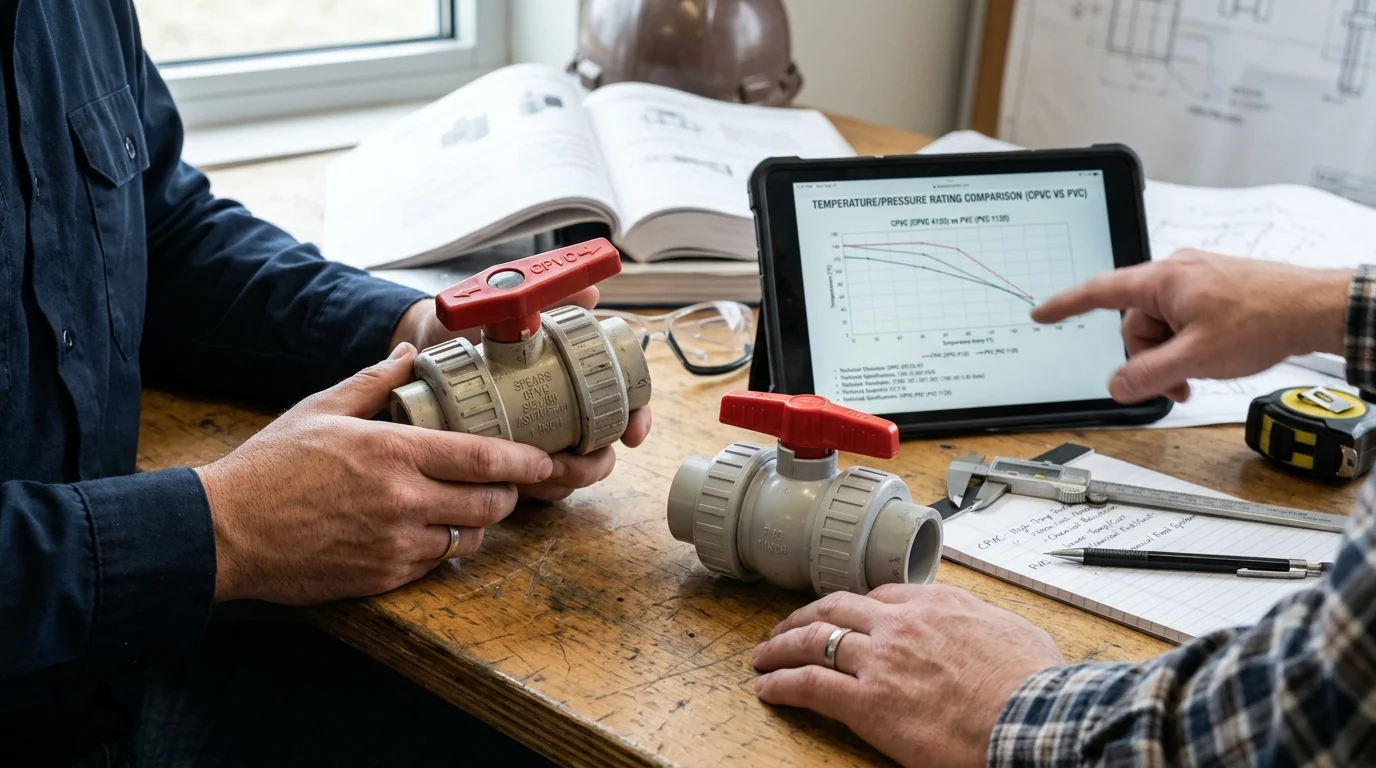
The unique molecular architecture of CPVC allows it to excel in environments where standard PVC valves would rapidly degrade or fail. Engineers typically specify CPVC when fluid handling parameters exceed the thermal or chemical boundaries of baseline thermoplastics, ensuring long-term reliability in demanding infrastructure.
Hot Water, Chlorinated Water, and Chemical Resistance
One of the most prominent applications for CPVC ball valves is the control and distribution of commercial and industrial hot water. Because standard PVC cannot safely handle the 160°F to 180°F (71°C to 82°C) water temperatures commonly required for institutional sanitization or hydronic heating loops, CPVC is utilized to accommodate these thermal loads without deformation of the valve body or internal port.
Furthermore, CPVC demonstrates excellent resistance to aggressive aqueous chemistries. In municipal water treatment and distribution, water is frequently treated with high concentrations of chlorine or chloramines. Over extended operational lifecycles—depending on variables like chlorine concentration, temperature, and mechanical stress—continuous exposure to these disinfectants can cause standard PVC to become brittle and prone to micro-fractures. The higher chlorine saturation in the CPVC polymer chain renders it highly resistant to this specific type of oxidative degradation. It also provides excellent resistance to broad ranges of concentrated acids, bases, and salts. However, CPVC is not universally superior to PVC for all chemical families; certain solvents, aromatics, or concentrated hydrocarbons may degrade CPVC more readily than standard PVC. Specifiers must always consult manufacturer chemical compatibility charts for specific chemical families.
Connections, Seals, and Installation Factors
Installation protocols and sealing mechanisms also differ significantly due to the distinct thermal profiles of the two materials. When utilizing solvent-welded end connections, CPVC requires a specific, highly aggressive solvent cement that complies with ASTM F493 standards. While often tinted orange or yellow, color is not a universal identifier; installers must verify the ASTM F493 standard on the specific product label. Standard PVC solvent cements, which follow ASTM D2564, will not properly fuse CPVC joints and will lead to pressure blowouts.
Additionally, the internal seals and O-rings within CPVC ball valves are often upgraded to match the material’s higher thermal rating. Internal seal material compatibility is as critical as the valve body material. While standard PVC valves might utilize basic EPDM seals, industrial-grade CPVC variants frequently incorporate FPM or FKM (fluoropolymer) elastomers for stem seals and seat carriers. These premium seals ensure that the valve’s internal shut-off mechanisms do not degrade when exposed to high-temperature corrosive fluids, thereby maintaining a tight shut-off under maximum specified operating pressures.
How to Choose Between CPVC and PVC Ball Valves
Selecting the appropriate valve requires a systematic evaluation of the intended operational environment against the physical limitations and cost implications of each polymer. Over-specifying drives up capital expenditures unnecessarily, while under-specifying introduces severe safety and operational risks.
Application Review Checklist
To determine the correct material, engineers should apply this decision framework: 1.
Key Takeaways
- Specify CPVC ball valves for higher-temperature service because CPVC can operate up to about 200°F (93°C), compared with roughly 140°F (60°C) for standard PVC.
- Check pressure ratings at the actual operating temperature because all thermoplastic valves lose pressure capacity as temperature increases.
- Verify valve dimensions, schedule, wall thickness, and sizing standard because CPVC and PVC products may follow CTS, IPS, Schedule 40, or Schedule 80 conventions.
- Use chlorine content as a material clue: PVC is about 57% chlorine by mass, while CPVC is typically 63%–69%, which supports better thermal stability.
- Review cold-weather handling requirements because CPVC can have reduced impact resistance below about 40°F (4°C), depending on compound and manufacturer.
- Do not substitute PVC and CPVC valves without confirming media compatibility, pressure, temperature, applicable codes, and manufacturer performance data.
Frequently Asked Questions
What is the main material difference between CPVC and PVC valves?
PVC contains about 57% chlorine by mass, while CPVC is post-chlorinated to about 63%–69%. The added chlorine improves CPVC’s thermal stability and expands its use in more demanding valve applications.
Which valve material handles higher temperatures?
CPVC handles higher temperatures. Standard PVC is generally limited to 140°F (60°C), while CPVC can operate up to about 200°F (93°C), depending on the valve design and manufacturer specifications.
Do CPVC and PVC ball valves have the same pressure rating?
Not necessarily. Pressure ratings depend on temperature, wall thickness, diameter, schedule, and valve standard. Both materials derate as temperature rises, but CPVC typically retains strength better at elevated temperatures.
Can CPVC and PVC ball valves be used interchangeably?
They should not be treated as interchangeable without verification. Check the fluid temperature, chemical compatibility, pressure rating, sizing standard, and manufacturer data before replacing one material with the other.
Is CPVC always better than PVC for ball valves?
No. CPVC is better for higher-temperature service, but PVC can be more suitable and cost-effective for ambient-temperature systems where its pressure, chemical, and code requirements are met.
Post time: Sep-04-2026