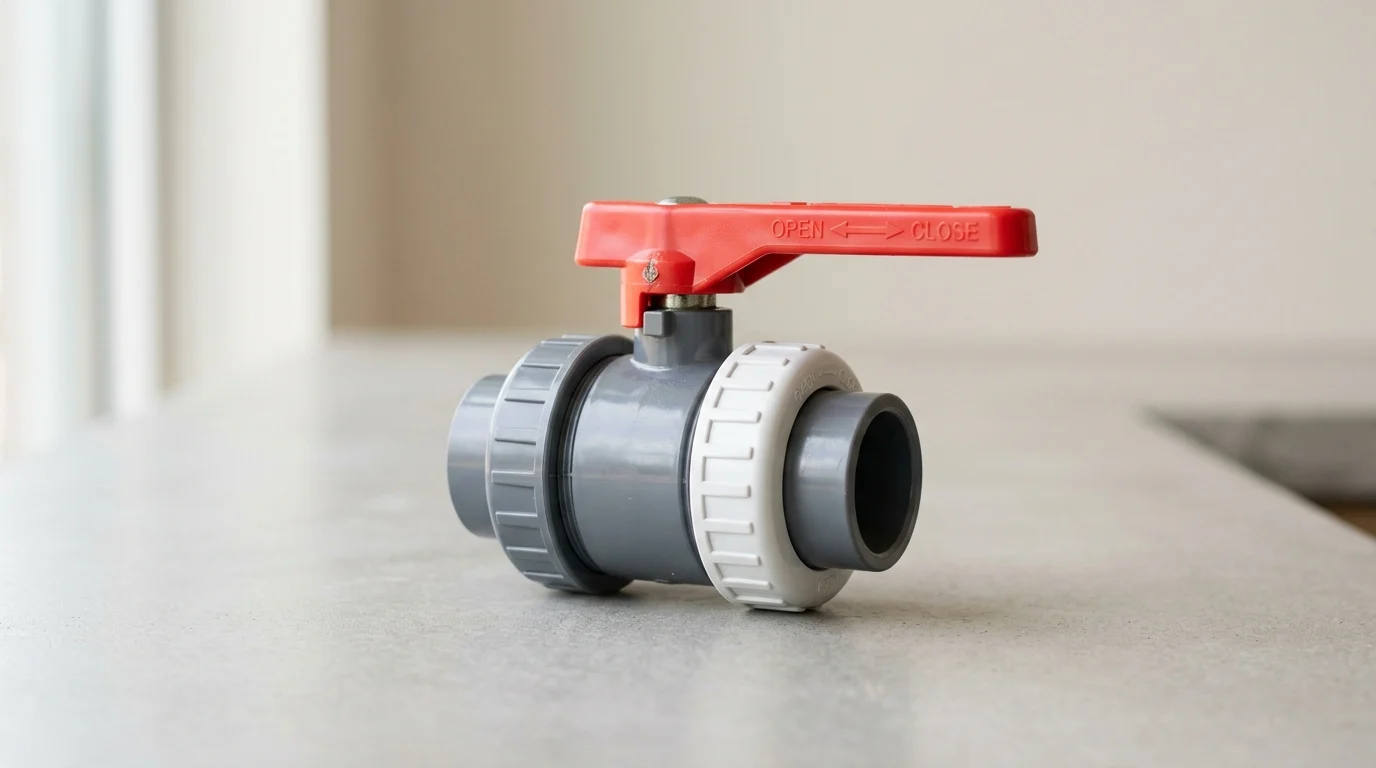
Typical Service Life of a PVC Ball Valve
Determining the precise operational duration of industrial piping components requires distinguishing between theoretical engineering limits and practical field realities. As a general rule, a high-quality, properly specified PVC ball valve will last 10 to 15 years in light-duty applications. This baseline does not apply to all commodity-grade threaded valves, which often fail sooner. In rigorous industrial environments, the lifespan drops to 3 to 7 years. A PVC ball valve serves as a critical control mechanism in chemical processing, water treatment, and agricultural irrigation. Because these valves rely on thermoplastic bodies and elastomeric seals, their longevity depends heavily on the operational environment rather than a fixed expiration date. Understanding these baseline expectations helps engineers optimize system reliability and minimize unplanned downtime.
Service Life vs. Design Life and Shelf Life
In fluid control engineering, service life, design life, and shelf life represent distinct metrics. Design life refers to the theoretical operational period calculated under ideal laboratory conditions. For unplasticized polyvinyl chloride (PVC-U) components operating at ambient temperatures (73°F or 23°C) with clean water, engineers often project a design life of 20 to 25 years. This metric assumes perfect installation and zero mechanical stress outside standard pressure ratings.
Conversely, shelf life dictates how long a valve can remain in storage before degradation occurs. Even without active fluid pressure, elastomeric O-rings (such as EPDM or FPM) can dry out. PVC bodies can also suffer UV degradation if exposed to direct sunlight. A typical warehouse shelf life of 3 to 5 years applies primarily to elastomeric seals and UV-exposed inventory. In contrast, PVC-U valve bodies can remain viable for decades in dark, climate-controlled storage. Service life is the actual functional duration achieved in the field, which invariably falls short of the design life due to real-world stressors.
Realistic Service-Life Ranges
Realistic service-life ranges vary drastically based on the application duty cycle. In light-duty, low-cycle applications like municipal water distribution or agricultural irrigation, a high-quality PVC valve can reliably perform for 10 to 15 years. These systems typically experience infrequent actuation and pump clean, non-aggressive fluids at stable ambient temperatures.
In rigorous industrial environments, the timeline compresses significantly. For chemical dosing systems or high-cycle automated processes, the realistic service life often ranges from 3 to 7 years. When measured in mechanical actuations, certain industrial designs with PTFE seats and premium elastomeric seals generally support between 50,000 and 100,000 cycles before friction and mechanical wear compromise the shut-off seal. However, standard commodity PVC ball valves often have substantially lower cycle ratings. Once a valve surpasses its cycle rating, internal seat leakage becomes highly probable. This requires replacement even if the external body remains intact.
Key Factors That Affect PVC Ball Valve Life
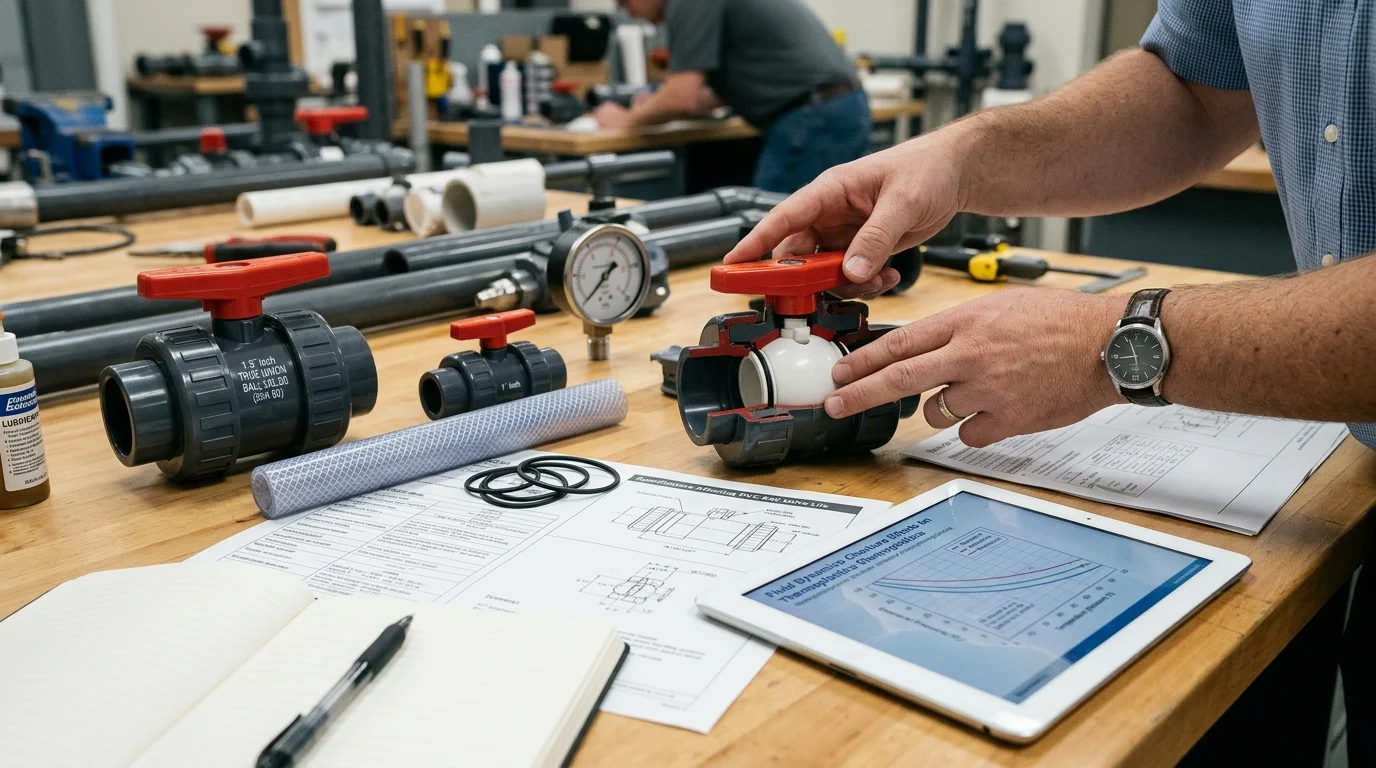
While baseline estimates provide a helpful framework, the actual degradation of a thermoplastic valve depends on hydraulic, chemical, mechanical, and environmental forces. System engineers must evaluate these variables during the design phase to prevent premature failure modes like seat wear, stem seal leaks, or catastrophic body fractures. Field conditions such as long-term UV exposure, freeze-thaw cycling, and the choice of end connections (threaded versus socket) materially affect fracture risk and overall service life.
Pressure, Temperature, and Media Compatibility
Thermoplastic materials exhibit a strict inverse relationship between temperature and pressure capacity. A Schedule 80 valve may boast a maximum pressure rating of 150 psi at 73°F (23°C), but PVC-U rapidly loses tensile strength as temperatures elevate toward its absolute operational ceiling of 140°F (60°C). At this upper limit, the pressure rating typically derates by approximately 78%, reducing the safe operational capacity to just 33 psi. However, pressure and temperature derating factors are manufacturer-specific and often differ between general pipe standards and specific valve standards. Exceeding the correct derated threshold induces thermal creep, warping the valve body and compromising the internal seal.
Media compatibility also dictates longevity. While PVC resists corrosive acids, alkalis, and inorganic chemicals (like sodium hypochlorite), it is highly susceptible to solvent-based media. Exposure to aromatic hydrocarbons, ketones, or esters will rapidly plasticize and dissolve the rigid PVC matrix, reducing service life from years to mere days. Furthermore, abrasive media containing suspended solids will aggressively erode the polished surface of the ball and the PTFE seats, accelerating internal leak paths.
Operating Conditions and Maintenance Practices
Beyond fluid characteristics, the physical operating environment and maintenance protocols heavily influence valve durability. High fluid velocities generate turbulent flow, which can induce cavitation—a phenomenon where localized pressure drops cause vapor bubbles to form and violently collapse against the valve internals. Additionally, rapid actuation of quarter-turn valves can trigger hydraulic transients, commonly known as water hammer. Environmental factors like unprotected UV exposure embrittle the plastic over time, while freeze-thaw cycles can crack fluid-filled bodies.
| Failure Mode | Primary Operational Driver | Typical Lifespan Reduction |
|---|---|---|
| Seat Wear | High-velocity abrasive media (e.g., slurries > 5 ft/s) | Reduces life to 1–3 years |
| Stem Leakage | High mechanical cycle frequency (>1,000 cycles/month) | Reduces life by 30–50% |
| Body Fracture | Water hammer (transient pressure spikes > 2x rating) | Immediate failure |
| Seal Degradation | Chemical incompatibility (e.g., incorrect O-ring material) | Fails within weeks to months |
Routine maintenance, such as periodically flushing the lines to remove scale buildup and exercising valves that remain static for extended periods, mitigates seizing. Because true union valves are designed to be maintenance-friendly, engineers often prioritize replacing the internal cartridge rather than attempting to resurface degraded thermoplastic components.
How to Maximize Life and Plan Replacement
Achieving the maximum possible service life from thermoplastic piping components requires a proactive approach from initial procurement to final field implementation. System designers and facility managers must enforce strict operational parameters and standardized installation protocols to protect the system from unnecessary mechanical and hydraulic stress.
Specification, Installation, and Commissioning Tips
Proper specification is the foundational step in maximizing longevity.
Key Takeaways
- Expect a properly specified, high-quality PVC ball valve to last about 10 to 15 years in clean, low-cycle, light-duty applications.
- Plan for a shorter 3- to 7-year replacement window in chemical dosing, automated processes, and other rigorous industrial environments.
- Do not confuse design life with service life, because a 20- to 25-year theoretical rating assumes ideal clean-water conditions at 73°F or 23°C.
- Check cycle ratings before using PVC ball valves in high-actuation systems, as premium industrial designs may support 50,000 to 100,000 cycles while commodity valves may not.
- Store spare valves away from sunlight and extreme conditions, since elastomeric seals commonly have a practical shelf life of 3 to 5 years.
Frequently Asked Questions
How long does a high-quality PVC ball valve usually last?
In light-duty systems with clean fluids and low cycling, a high-quality PVC ball valve typically lasts 10 to 15 years. In harsher industrial service, a more realistic range is 3 to 7 years.
Why do industrial PVC ball valves fail sooner?
Industrial systems often expose valves to aggressive chemicals, frequent actuation, pressure changes, temperature variation, and mechanical stress. These conditions accelerate wear on the PVC body, seats, and elastomeric seals.
Is service life the same as design life?
No. Design life is a theoretical estimate under ideal conditions, often 20 to 25 years for PVC-U with clean water at 73°F or 23°C. Service life is the actual operating life in the field.
How long can a PVC ball valve stay in storage?
Shelf life is commonly 3 to 5 years for valves with elastomeric seals, especially if storage conditions are poor. PVC-U bodies can last much longer in dark, climate-controlled storage.
How many cycles can an industrial PVC ball valve handle?
Some industrial PVC ball valves with PTFE seats and premium seals can support about 50,000 to 100,000 cycles. Commodity-grade valves often have much lower cycle ratings.
Post time: Sep-02-2026